
What is a sourdough starter?
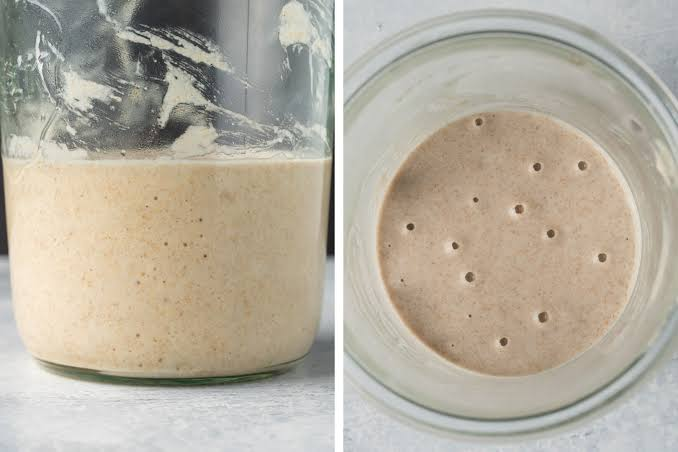
A sourdough starter is a living culture of wild yeasts and beneficial bacteria that naturally ferments and leavens bread. This complex ecosystem gives sourdough its distinctively rich flavor and airy texture, contrasting with commercial yeast, which relies on a single yeast strain.
How is it stored?
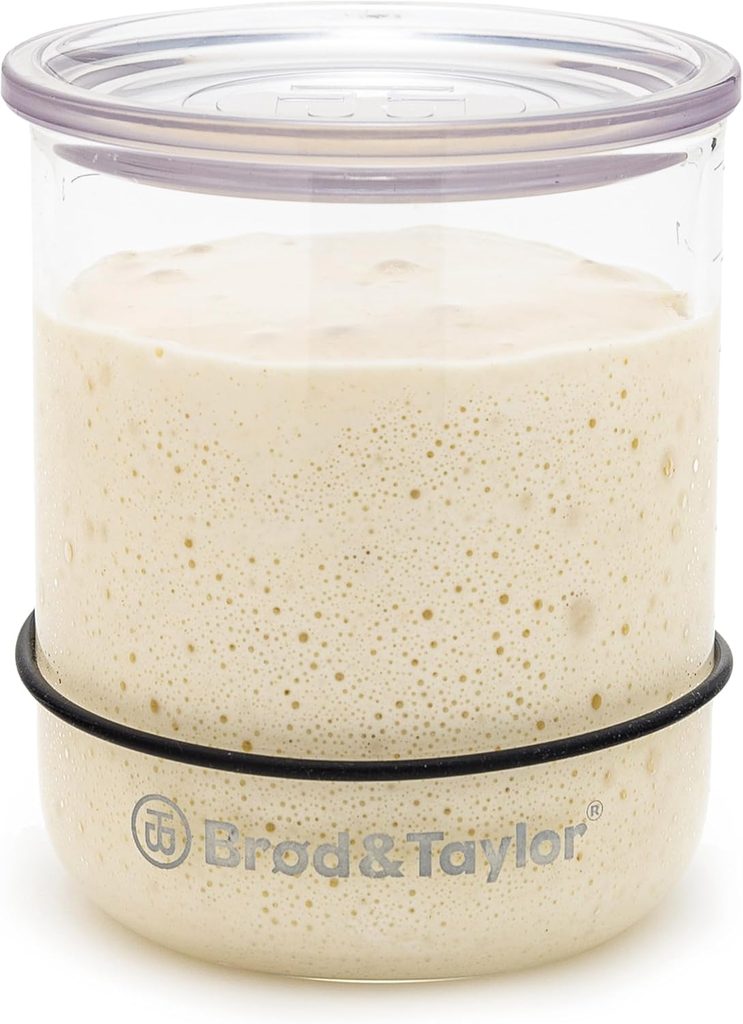
For home baking, I prefer storing my starter in the smaller 12 oz Sourdough Starter Jar from Brod & Taylor. It holds enough starter for up to three sourdough recipes at a time. The measurement markings and height indicator make it easy to track its growth between feedings.
How do I maintain my starter?
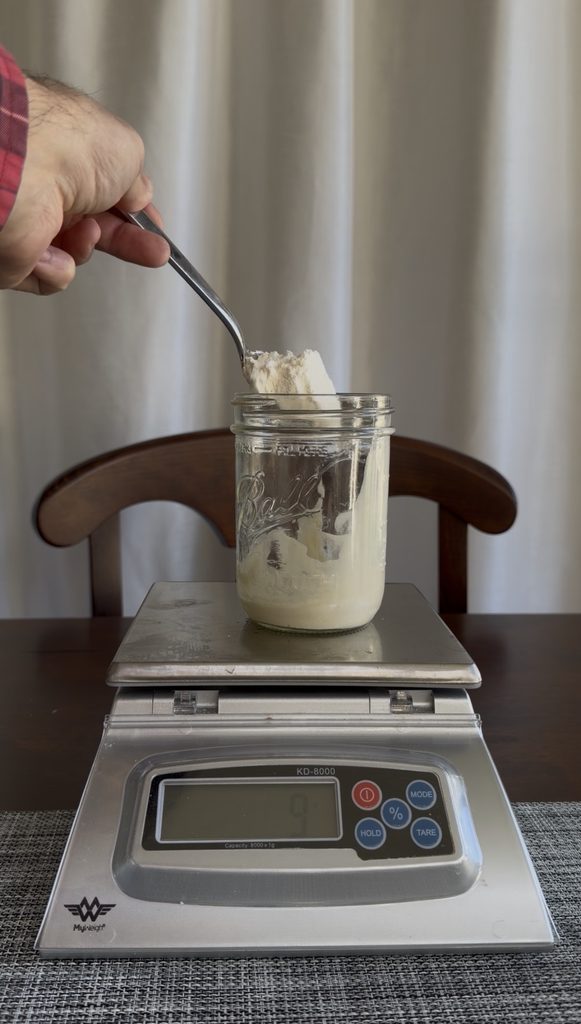
Sourdough starters should be fed daily to keep the balance of lactic and acetic acids stable. However, if you only plan on baking once a week, you can keep the starter in a refrigerator and feed it weekly. It is most common to discard or use half of the starter for a recipe and add back equal parts flour and water. For example, start with 40 grams starter, discard or use 20 grams, and add back 10 grams flour and 10 grams water. You can also feed your starter more if you plan on baking a larger batch.
Measuring by weight is a good practice to ensure consistency in your feedings, as well as for your dough in recipes. I enjoy using this scale because it measures to the exact gram, accommodates heavier weights for large batches of dough (up to 8 kg or 17.6 lbs), and can be powered by either batteries or an adapter.
When is it active after a feeding?
A good rule of thumb is when it has doubled in size and is bubbly. This typically takes 4-5 hours for 1:1:1 or 7-8 hours for 1:2:2. Higher ratio feedings are great overnight or while you are at work!
Does the room temperature matter?
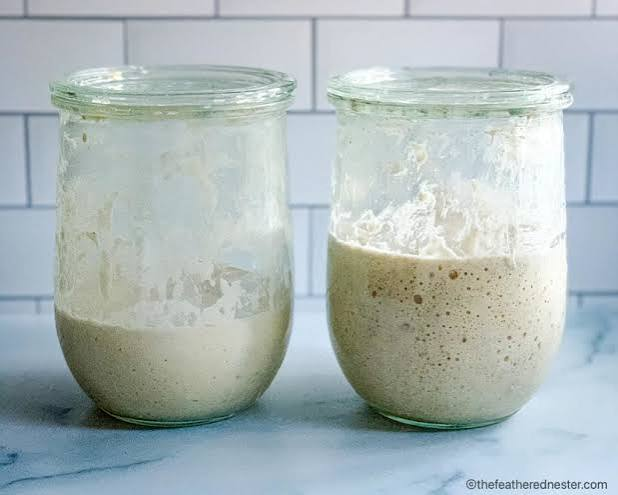
It does make a difference! Unless you maintain a consistent temperature in your home throughout the year, the seasons will affect the timing. Starters ferment faster in warmer environments and slower in cold ones. The ideal temperature for a starter is 68°F to 80°F (20°C to 27°C).
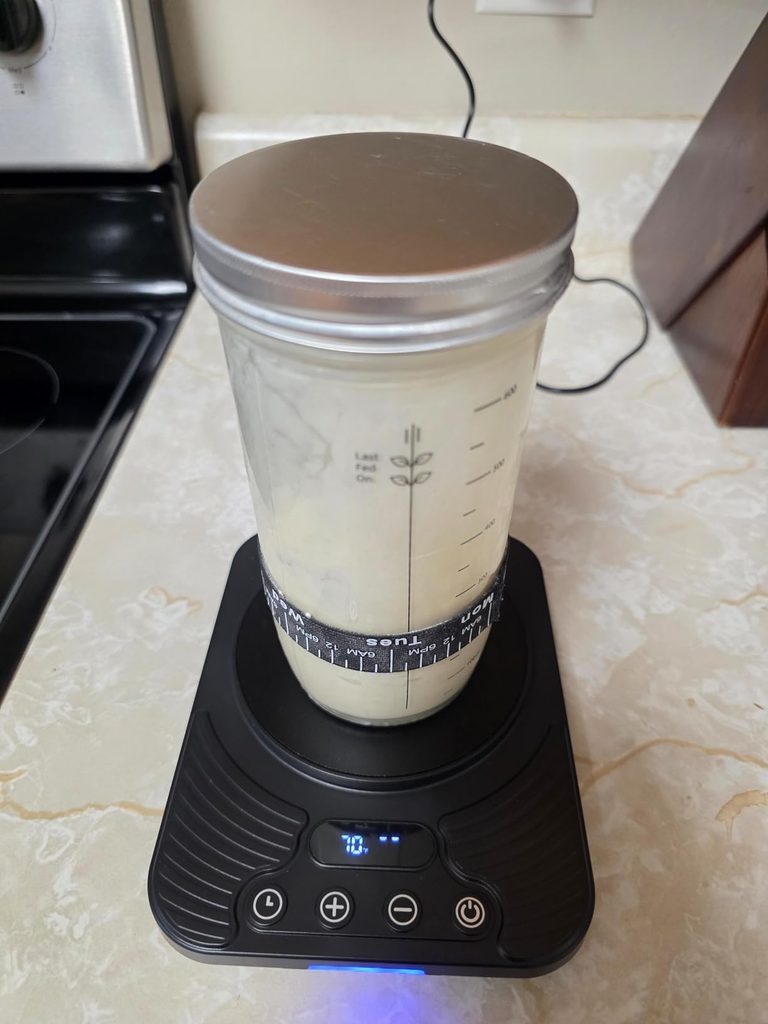
If your house runs cold in the winter, there are methods to warm up your starter. You can leave it in your oven with the light on, which generates just enough heat. Or, for a more precise gauge, you can use a temperature controlled warming plate with a glass dome.
How is sourdough starter created?
A sourdough starter is created by adding water to fresh flour to a glass jar. This hydrates the flour and releases sugars, which act as food for the yeast and bacteria that live on the flour.
Creating a sourdough starter requires daily feeding of fresh flour and water in a jar for at least 7 days. You can tell it is ready for its next feeding when the starter smells very acidic (like acetone in the first few days). When building a starter, it is necessary to discard half of the starter to prevent acid from building up too quickly and killing the yeast.
How can I speed up creating a starter?
Whole wheat flour is helpful for creating a sourdough starter because the bran and germ contain more nutrients to speed up fermentation. You can also add grapes wrapped in cheesecloth, since their skins naturally harbor wild yeast. You can also use pineapple juice in place of water during the initial stages to lower the starter’s pH, creating a more favorable environment for beneficial bacteria to thrive.
What is the difference between a liquid and a stiff starter?
A liquid starter contains equal parts flour and water by weight, giving it a pourable consistency similar to pancake batter. Their higher hydration also encourages faster fermentation, making them convenient for same-day recipes.
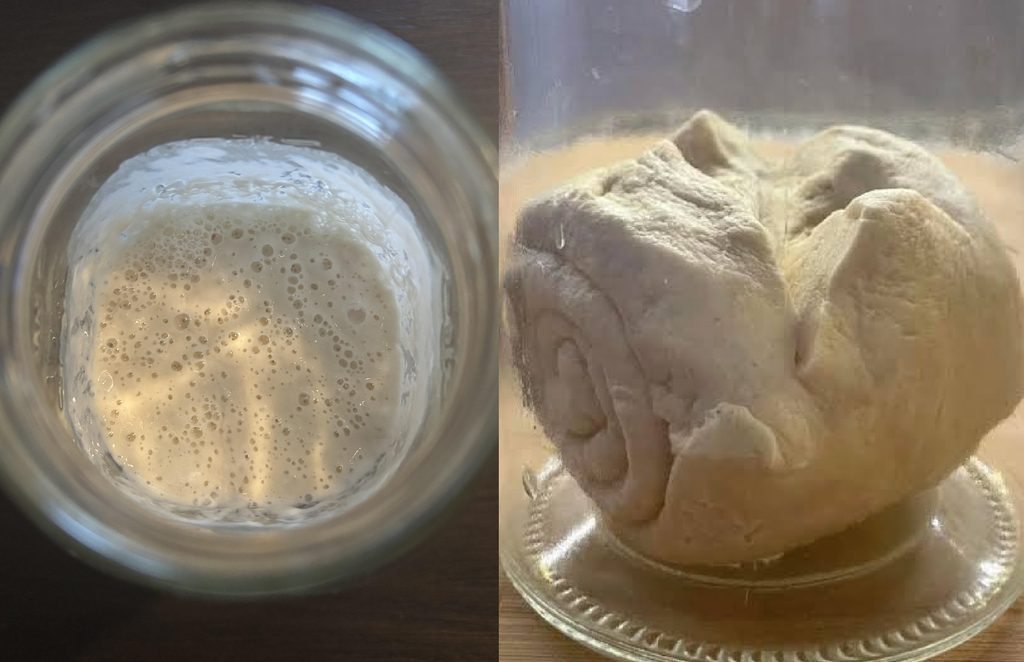
A stiff starter contains less water, resulting in a firmer, dough-like texture. Stiff starters ferment more slowly and tend to encourage greater acetic acid production, which produces a sharper, more pronounced sour flavor. They can also be useful when you want to control fermentation.
What thickness is better?
Neither is inherently better—the best choice depends on how you bake and the characteristics you want in your bread. Just remember that changing the starter’s hydration also changes the amount of water and flour contributed to the overall dough recipe.